How to Use Walking for Better Sleep: Improve Your Rest with Daily Steps and Finally Beat Insomnia
A simple habit that could quietly fix your nights You’ve checked the clock three times already, flipped your pillow twice, and mentally replayed conversations from five years ago for no good reason. You know you need sleep. You want sleep. But your body and brain are clearly not cooperating. If that sounds familiar, you’re not alone...
PHILIP MC COLL
5/2/20266 min read
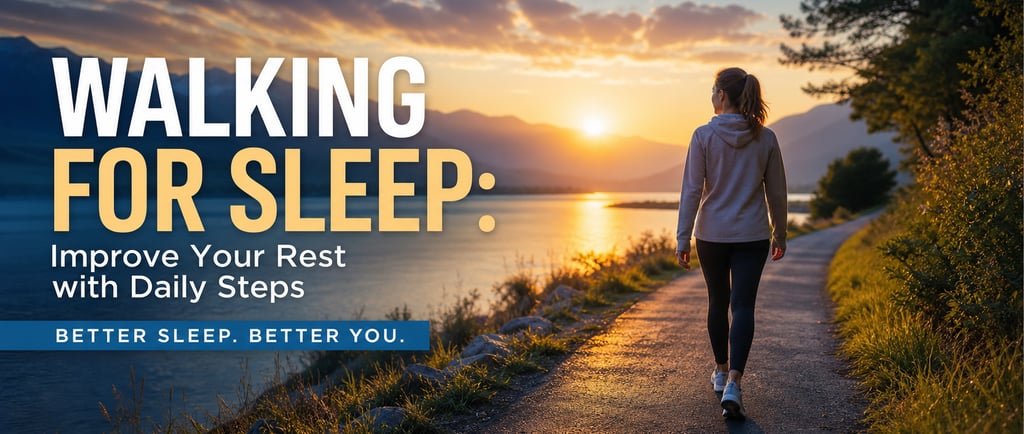

How to Use Walking for Better Sleep: Improve Your Rest with Daily Steps and Finally Beat Insomnia
A simple habit that could quietly fix your nights
It’s 2:17 a.m.
You’ve checked the clock three times already, flipped your pillow twice, and mentally replayed conversations from five years ago for no good reason. You know you need sleep. You want sleep. But your body and brain are clearly not cooperating.
If that sounds familiar, you’re not alone.
Millions of people struggle with falling asleep, staying asleep, or waking up feeling like they barely rested at all. And while there are countless sleep hacks out there—supplements, apps, strict routines—many people overlook one of the most effective, accessible tools available:
Walking.
Not intense workouts. Not complicated routines. Just walking.
Done consistently and intentionally, walking can help regulate your sleep cycle, reduce stress, balance hormones, and make falling asleep feel natural again—not like a nightly battle.
This guide isn’t about vague advice like “be more active.” This is a practical, step-by-step approach to using walking specifically to improve your sleep. If you follow it, you won’t just move more—you’ll rest better.
Why walking works for sleep (and why it’s more powerful than you think)
Before we get into the “how,” it’s important to understand why walking has such a strong impact on sleep.
Because once you understand this, you’ll take it seriously—and stick with it.
1. It resets your internal clock
Your body runs on a circadian rhythm—a roughly 24-hour cycle that controls when you feel awake and when you feel sleepy.
Modern life completely messes this up:
Too much artificial light at night
Not enough sunlight during the day
Irregular schedules
Walking outdoors, especially in the morning, exposes you to natural light. That light tells your brain: “This is daytime. Stay alert now so we can sleep later.”
This simple signal can shift your entire sleep cycle back into alignment.
2. It reduces stress (the silent sleep killer)
You might think your sleep problem is physical. Most of the time, it’s mental.
Stress, anxiety, and overthinking keep your nervous system in a “fight or flight” state. And your body does not fall asleep easily when it thinks you need to survive something.
Walking helps by:
Lowering cortisol (your stress hormone)
Increasing endorphins (feel-good chemicals)
Giving your brain a break from constant stimulation
Even a 20-minute walk can noticeably calm your mind.
3. It builds “sleep pressure”
Sleep pressure is your body’s natural drive to sleep. The longer you’re awake and active, the stronger it gets.
If you sit most of the day:
Your body doesn’t feel “tired” in a physical sense
Your brain stays overstimulated
Sleep becomes shallow or delayed
Walking adds just enough physical activity to build healthy fatigue—without overstimulating your body like intense workouts can.
4. It improves mood and mental clarity
Poor sleep and low mood feed each other. Walking interrupts that cycle.
Regular walking:
Reduces symptoms of anxiety and depression
Improves mental clarity
Helps you process thoughts instead of bottling them up
And when your mind is calmer during the day, it’s quieter at night.
The biggest mistake people make
Let’s get this out of the way.
Most people try walking randomly and expect results.
One long walk on Saturday
Nothing for three days
A rushed walk at night
That doesn’t work.
Sleep responds to consistency, not intensity.
You don’t need to walk far. You need to walk regularly.
The step-by-step plan: How to walk for better sleep
Let’s turn this into something you can actually follow.
Step 1: Start with a realistic baseline
Don’t jump into 10,000 steps if you’re currently doing 2,000.
Start here:
If you’re inactive: 4,000–5,000 steps per day
If you’re somewhat active: 6,000–8,000 steps
If you’re already active: aim for consistency, not more
The goal is to build a habit, not burn out.
Step 2: Prioritize morning walking (this is key)
If you only change one thing, make it this.
Walk within 1 hour of waking up.
Even 10–20 minutes helps.
Why it matters:
Exposes you to natural light
Signals your body to start the day properly
Helps you feel sleepy at night at the right time
If possible:
Walk outside (not on a treadmill)
Don’t wear sunglasses immediately—let natural light reach your eyes
Step 3: Add a midday or afternoon walk
This is optional—but powerful.
A second walk:
Breaks up long periods of sitting
Reduces mental fatigue
Keeps your energy stable
Even 10 minutes after lunch can help.
Step 4: Use evening walks to unwind (but don’t overdo it)
Evening walks can be great—but timing matters.
Best approach:
Walk 1–2 hours before bed
Keep it light and relaxed
Avoid fast-paced or intense walking late at night
Think of this walk as a transition:
From work mode → rest mode
From stimulation → calm
Step 5: Keep it simple (this is not a fitness challenge)
You don’t need:
Special shoes (basic comfort is enough)
A perfect route
A strict schedule
What you do need:
Consistency
A low barrier to starting
A mindset that says: “I just need to begin”
How long until you see results?
This is important because people quit too early.
Here’s a realistic timeline:
After 2–3 days:
Slightly better mood
Reduced stress
After 1 week:
Falling asleep becomes a bit easier
Less restlessness
After 2–3 weeks:
Noticeable improvement in sleep quality
More consistent sleep times
After 1–2 months:
Your body expects sleep at the right time
Insomnia symptoms may significantly decrease
Consistency is everything here.
What to think about while walking (this matters more than you think)
Walking is not just physical—it’s mental.
If you spend your walk:
Scrolling your phone
Answering emails
Consuming stressful content
You lose half the benefit.
Instead, try:
Option 1: Let your mind wander
This sounds simple, but it’s powerful.
Let your brain:
Process thoughts
Solve problems naturally
Drift without pressure
Option 2: Focus on your surroundings
Notice:
The sound of your steps
The air
The environment
This grounds you and reduces mental noise.
Option 3: Listen to calming audio
If silence feels uncomfortable:
Try music
Audiobooks
Podcasts (not stressful ones)
Avoid anything that spikes your stress or attention.
Pair walking with these simple sleep habits
Walking works best when combined with a few key habits.
You don’t need a perfect routine—just a few solid anchors.
1. Keep your sleep time consistent
Go to bed and wake up at roughly the same time every day.
This reinforces the circadian rhythm your walking is helping reset.
2. Limit screens before bed
Blue light and stimulation delay sleep.
Try:
No screens 30–60 minutes before bed
Or at least reduce brightness
3. Avoid heavy meals late at night
Digestion can interfere with sleep.
Eat earlier when possible.
4. Create a wind-down ritual
This can be simple:
Reading
Stretching
A warm shower
Pair this with your evening walk for a powerful effect.
Common obstacles (and how to handle them)
Let’s address the real-life problems that can get in your way.
“I don’t have time”
You don’t need an hour.
Start with:
10 minutes in the morning
10 minutes later in the day
That’s enough to begin.
“I don’t feel motivated”
Don’t rely on motivation.
Use this rule:
“I’ll walk for 5 minutes.”
Once you start, you usually continue.
“The weather is bad”
Options:
Walk indoors (malls, hallways, treadmill)
Shorten the walk, but don’t skip it
Consistency matters more than conditions.
“I tried it and it didn’t work”
Ask yourself:
Did you do it consistently for at least 2 weeks?
Did you walk at the right times (especially morning)?
If not, adjust and try again.
A simple weekly plan you can follow
Here’s an easy structure:
Monday–Friday:
Morning: 15–20 minute walk
Optional: 10-minute midday walk
Evening: light 10–15 minute walk
Weekend:
One longer relaxed walk (30–60 minutes)
Keep mornings active
No pressure. Just movement.
What happens if you stick with it
This is where it gets interesting.
When walking becomes part of your daily life:
You fall asleep faster
You wake up feeling more rested
Your energy stabilizes
Your mood improves
Your mind feels quieter at night
Sleep stops feeling like something you have to “force.”
It just… happens.
The bigger picture: It’s not just about sleep
Walking doesn’t just fix your nights. It improves your days.
You’ll likely notice:
Better focus
More patience
Less anxiety
More clarity
And ironically, when your days improve, your sleep improves even more.
Final thoughts: Start smaller than you think
You don’t need a massive life overhaul.
You don’t need perfection.
You just need to start walking—consistently, intentionally, and with a focus on supporting your sleep.
If you take one thing from this entire guide, let it be this:
A short walk done daily is more powerful than a perfect routine you never follow.
So tomorrow morning, don’t overthink it.
Put on your shoes.
Step outside.
And walk.
Your future, well-rested self will thank you.


Help
Support for your walking journey
We are affilates, which means that we way receive a small commission if you ever buy a product on our website, with no extra-coast for you of course. Thank You very Much!
Contact
Subscribe
walk@walkyourweightoff.com
+1-555-123-4567
© 2025. All rights reserved.